SELECTING THE RIGHT EMS AND RESCUE BAG FOR OPERATIONAL DEPLOYMENT

Choosing the correct deployment system begins with matching equipment layout to how your crew operates on scene, not just what fits in a vehicle compartment. For departments evaluating EMS and rescue bags, the primary consideration is how quickly clinicians and rescuers can access critical tools under time pressure and limited visibility.
At First Out Rescue Equipment, we support selection based on real-world deployment roles, including EMS first response and fireground medical support. An ALS provider working on prolonged incidents may prioritize structured compartmentalization, while rapid-intervention teams often require simplified grab-and-go configurations.
CONSTRUCTION AND DURABILITY STANDARDS FOR FIELD-READY USE
Material performance is a defining factor in long-term reliability, particularly in environments where abrasion and repeated deployment are unavoidable. Our high-quality EMS and rescue bags are designed and crafted with construction standards to ensure consistent performance during high-frequency response cycles.
Our emergency response equipment selection prioritizes durability without compromising internal organization, ensuring crews can depend on consistent functionality across varied incident conditions.
Connect with us today to evaluate EMS and rescue bags tailored to your department’s operational requirements.
FREQUENTLY ASKED QUESTIONS
What is the advantage of carrying multiple EMS and rescue bags instead of one large system?
Multiple-bag systems improve scene flexibility by allowing responders to deploy only what is needed rather than carrying a single heavy unit. This reduces fatigue, improves mobility in restricted environments, and enables task-specific assignment between team members. Many agencies assign separate bags for airway management, trauma care, and logistical support to improve operational efficiency.
How do modular rescue bag systems impact field efficiency compared to fixed-layout designs?
Modular systems improve adaptability by allowing teams to reconfigure internal kits based on incident type, but they require disciplined packing standards to maintain consistency. Fixed-layout systems offer faster familiarity and reduced training demands but may be less flexible across diverse response scenarios. The choice depends on whether adaptability or deployment speed is the department’s priority.
How should contamination control be managed for rescue bags in the field?
Contamination control begins with separating clean and contaminated zones within the bag structure wherever possible. After exposure to bodily fluids, smoke, or hazardous environments, exterior surfaces should be decontaminated according to departmental protocols before reloading.
EMS AND RESCUE BAGS
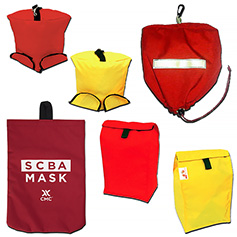
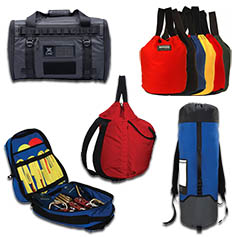
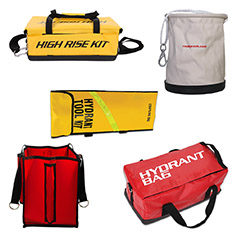
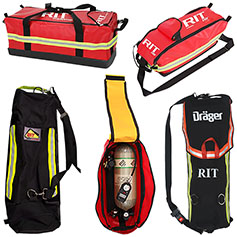
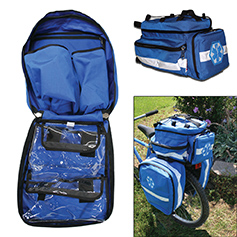
- SCBA AIR MASK BAGS
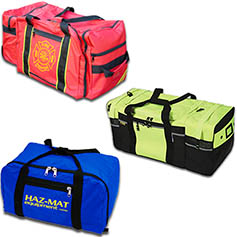
- Turnout Gear & Haz-Mat Bags
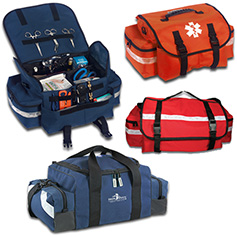
- Reliable EMS Trauma Bags for Fast-Moving Emergency Calls
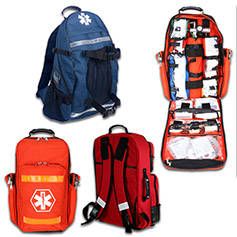
- EMS Backpacks for Emergency Response Teams
- EMS Equipment Modules
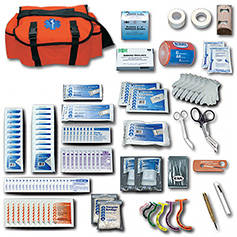
- EMS Stocked Response Kits
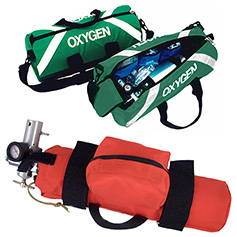
- Oxygen Bags
- Rope / Equipment
- FIRE HYDRANT BAGS FOR FAST RESPONSE
- RIT / FAST Team Bags
- EMS BICYCLE PANNIER BAGS FOR FIRST RESPONDERS
- Water Rescue
Featured